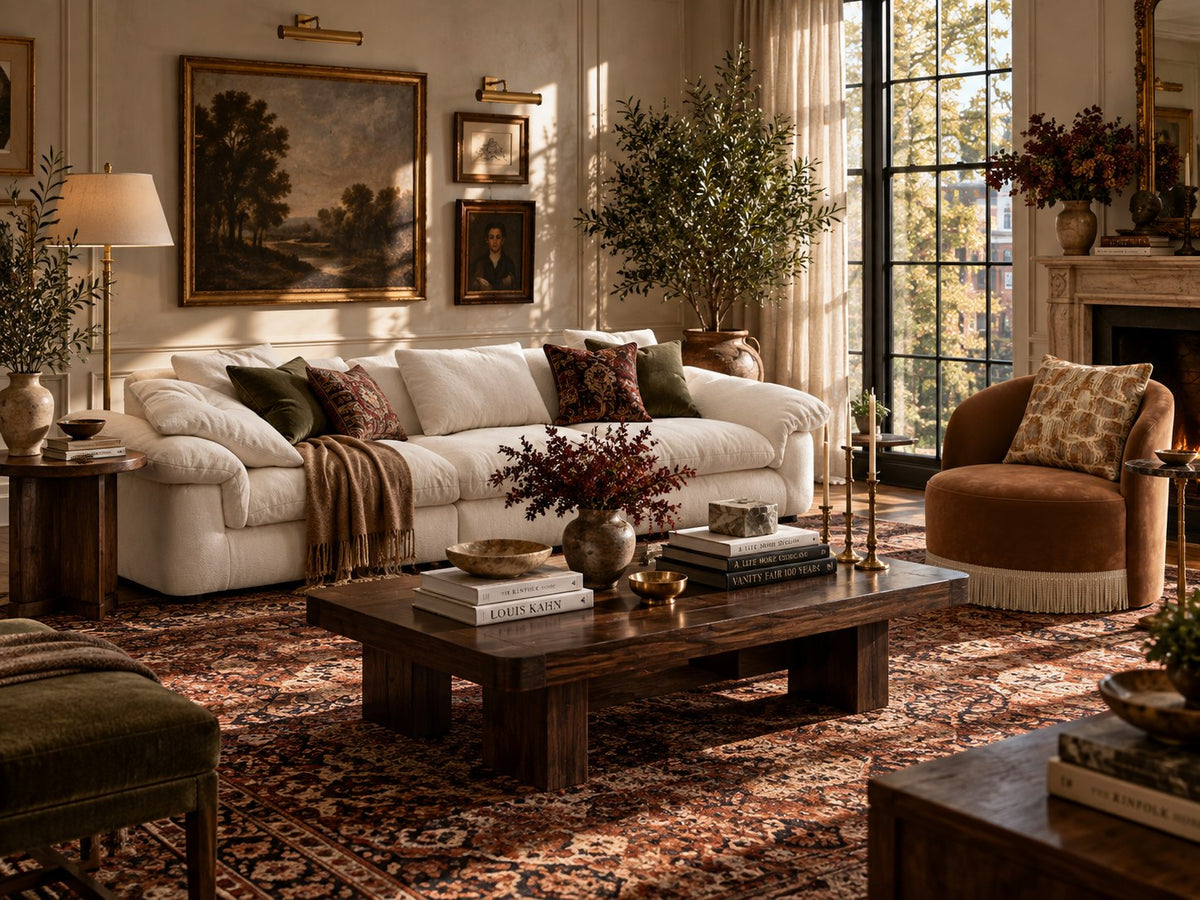
A collected home rarely comes together all at once. It takes shape gradually, as furniture, artwork, textiles, and personal finds come together over time. Rather than following a single style or choosing everything at once, the process is about creating a space that reflects how you live and what you love.
Layered interior design offers a way to bring these elements together. Through thoughtful combinations of materials, colors, and shapes, a room can feel rich in detail without becoming cluttered or overly coordinated. The living room, dining room, and bedroom each offer different ways to put this approach into practice. Ivory upholstery, caramel, dark wood, brass and a vintage-style rug share a warm visual language without behaving like a matching furniture set.
What Makes a Layered Interior?
Start with a few key pieces, then build around them. Pair soft upholstery with wood or metal, introduce patterned textiles against quieter surfaces, and use artwork or lighting to add visual interest.
The key is balance. If a piece has a bold shape or pattern, let the surrounding elements be simpler. Repeat a color or material in a few places to create a sense of connection, and leave some surfaces and corners uncluttered.
There's no need to finish everything at once. Adding pieces gradually gives you time to see what works together and helps the room develop a more natural, personal feel.
Collected is not about owning more. It is about allowing objects from different moments to develop relationships over time.
Living room
Cloud sets the ease. Hollis adds the character.
The Cloud Sofa is built around relaxed construction rather than visual tension. Its low profile, generous seat cushions, plush back pillows and pillow-like arms retain a natural degree of creasing and drape, so the piece looks comfortable before anyone sits down. The proportions also make room for the way people actually use a sofa—cross-legged, curled up, leaning into an arm or stretching out. The point is not an abstract promise of “softness,” but a less prescriptive, more adaptable way to sit. Natural creasing, plush back pillows and a low, relaxed profile give the Cloud Sofa softness without visual disorder.
Hollis works on the more expressive side of the composition. Caramel upholstery, a continuous curved back and arm profile, and a generous lounge scale give the chair clear presence; the cream fringe is handled as a tailored finish rather than decorative excess. A deep seat and plush movable back cushion leave room for cross-legged sitting, side sitting or settling in with a book. The contrast of caramel, cream and the patterned pillow gives the chair enough distinction to read as a statement piece without becoming period furnitur Curved volume creates a sense of enclosure, while the cream fringe adds movement and a restrained reference to American upholstery traditions.
Dining room
A sculptural wood table: presence through proportion, not ornament.
This dining table sits between the substance of traditional American furniture and the restraint of Organic Modern. Natural wood, softened geometry and neutral upholstery keep the composition current, while a sculptural base and an approximately 2.2-inch (5.5 cm) tabletop give it visual weight. In an open-plan dining space, that thickness reads as proportion and structure rather than ornament, creating a stronger anchor than a typical thin-profile table.
That balance also makes the table well suited to a collected interior. Lighter wood can sit comfortably beside darker cabinetry, vintage ceramics, brass, traditional artwork or more contemporary pieces. When the woods share a warm undertone, variation adds depth instead of reading as a mismatch. The natural grain and substantial top establish the room’s calm center; darker wood, brass and a vintage-style rug add the layers around it.

Bedroom
A floating bed with sculptural presence—without turning the room into a theme.
The bed takes its identity from natural forms rather than added ornament: a petal-inspired upholstered headboard, an integrated side surface with a fluid profile and two levels of storage, and a floating base that visually lightens the composition. Integrated motion-activated lighting reinforces the floating effect while keeping the silhouette low and quiet. In a collected room, the blush upholstery works best as one contemporary layer—not as a cue to make everything pink. Dark wood, burgundy, olive, warm white, brass and traditional artwork give the color a more mature context. The petal-inspired headboard and floating base establish a clear contemporary layer against traditional artwork, darker wood and a vintage-style rug.
Let Your Home Evolve Over Time
Creating a collected home doesn't mean getting every detail right from the beginning. Start with the pieces that matter most to you, then build around them gradually.
Pay attention to how materials, colors, and shapes work together. Keep what feels right, leave room for new finds, and don't feel the need to fill every empty space.
Over time, these choices become part of what makes a home feel personal. The result isn't a perfectly matched interior, but a space that reflects your taste, your routines, and the things you've chosen to live with.


