A neutral sofa is the quiet anchor of a living room—a soft, pale canvas that invites endless possibility. You fall in love with its understated silhouette and effortless warmth, but the real magic begins when you style it. Without a complete room overhaul, a shift in lighting and a few curated accents can completely transform its mood. Today, using the same MIRELANO sofa as our starting point, we explore three distinct living room expressions: a fresh traditional mix, a warm modern rustic retreat, and a rich, vintage-inspired cottage. Discover how one exceptional piece can shape three completely different ways to live well.
These three MIRELANO styling concepts explore a different starting point: keep the sofa, then give the surrounding pieces a clear relationship. A green-walled room brings together stripes, artwork, and mixed tables. A vaulted country-inspired space repeats warm accents around a conversation group. A deeper olive room pairs the sofa with floral upholstery and vintage-inspired patterns.
Each look includes a wide view and two closer views, so you can move from the overall feeling to the choices around the seat itself. Look for something you can use with the furniture you already have: a color to repeat, a shape to contrast, or a simpler way to arrange the pieces you love.
01
Look 1: A Collected Traditional Living Room

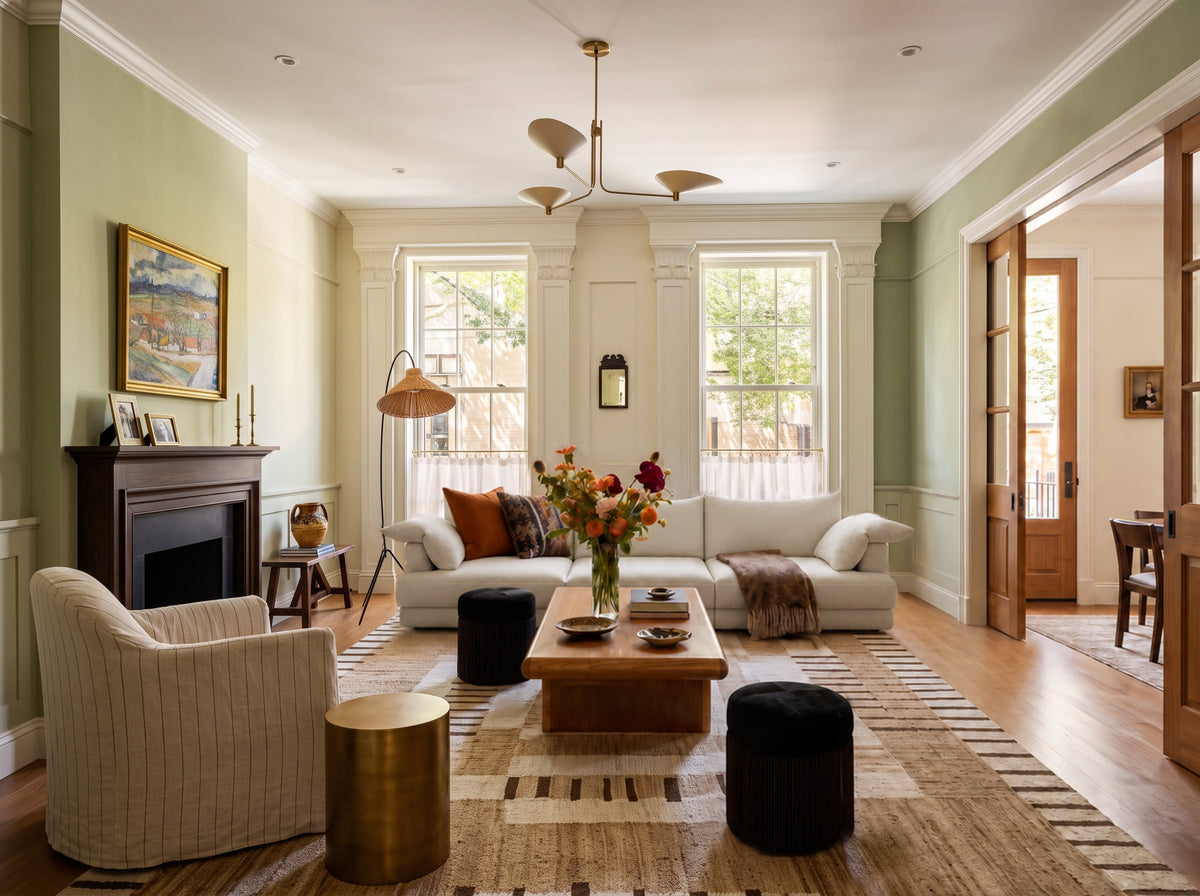
A light sofa gives the mixed furniture and decorative details a quiet center.
In the first room, pale green walls and cream trim frame the sofa, while a dark fireplace surround gives the space a stronger edge. The wood-toned coffee table, striped chair, black stools, and brass-colored side table have distinct shapes. Together, they suggest a room assembled around individual pieces rather than a matching furniture set.
Keep the sofa visually quiet
The sofa offers a pause between the wall color, rug pattern, and decorative objects. More expressive pillows gather toward one end; a patterned throw adds interest at the other. Enough upholstery remains visible for the sofa to read as a light, continuous shape. This is a useful approach when the room already contains several things you want people to notice.

Warm accents connect the pillows, wood-toned table, and flowers without exact color matching.
Repeat color between the sofa and table
The front-facing view makes the warm accents easier to follow. Orange-brown pillows relate to the wood-toned table, while a darker patterned pillow adds definition against the pale upholstery. The flowers introduce another variation of those warm colors. The objects do not match exactly, but they belong to a recognizable color family.
Start with a color already present in your artwork or rug. Try it in one pillow before buying a whole group of accessories. Leave some of the sofa clear, and keep enough table space for everyday use. A lower arrangement would also make conversation across this table easier.

Different furniture outlines share a palette; borrow the relationships rather than every piece.
Mix shapes, give each piece a purpose
The angled view reveals the different outlines around the sofa: the rounded chair, broad rectangular table, narrow side table, and compact stools. The striped upholstery adds a small-scale pattern beside the rug's larger geometric arrangement. Dark details in the fireplace and stools repeat across the room, helping the variety feel connected.
You can borrow that variety without recreating the entire furniture count. In a smaller room, a chair and one useful side table may be enough. Choose the piece that solves a daily need first, then consider whether another shape actually improves the composition or simply fills the floor.
02
Look 2: A Warm Modern Country Living Room

Warm seating accents balance blue-gray shelving and the architectural scale of the room.
The second room has a stronger architectural presence. Wood trusses rise above the seating group, a tall fireplace wall anchors the back, and blue-gray bookcases introduce a cooler color along one side. The pale sofa keeps the center light. Caramel and rust accents bring warmth down from the timber-colored ceiling to the level where people sit.
Balance warm accents with cooler colors
Warm tones appear in the central upholstered ottoman, rounded accent chair, pillows, and throw. Blue-gray notes in the shelving and rug offer a quieter counterpoint. Repeating a color family across different objects connects the room without making every object identical.
If your home already has a blue cabinet or rug, compare a warm brown accent beside it before replacing anything large. If the woodwork is your starting point, repeat a related warmth in a small textile. Judge these relationships in your own light, using physical samples when available.

The seats face a shared center. Adapt the furniture count to the space you actually use.
Arrange seats around conversation
The closer room view brings the sofa, wood-framed chairs, and rounded chair into one group around the ottoman. Their different profiles contribute variety, while their orientation gives the arrangement a shared center. The result is a useful model for planning conversation, even if your room needs fewer seats.
Try turning one chair slightly toward the sofa instead of pushing all seating against the walls. Check the route into each seat and the route through the room. If you choose an ottoman for the center, confirm its intended uses and whether its surface works with the tray or objects you plan to place there.

Different visible textures add interest while leaving the pale sofa as the backdrop.
Build texture around the sofa
The sofa-corner view shows how pale upholstery, a warm solid pillow, a patterned lumbar pillow, and a rust-colored throw can occupy the same area without becoming one flat block of color. Their visible surfaces differ, and the pale sofa remains a backdrop for the smaller accents. Nearby, the wood-toned chair frame adds a more defined line.
Use this as a layering idea, rather than a requirement to buy each pictured accessory. Begin with one pillow and one throw that look distinct from the upholstery. Keep the pieces you use within reach, and remove any that make sitting down feel like clearing a display.
03
Look 3: A Cozy, Vintage-Inspired Cottage Living Room

The pale sofa creates a light anchor among olive walls, floral upholstery, and patterned textiles.
The third room has a more enclosed feeling, with olive-green walls surrounding the seating area. A tiled fireplace, floral chair, patterned rug, framed pictures, and decorative window shades create a richer background. The pale sofa becomes the clearest light shape among these layers, linking the bright windows to the seating area.
Give a darker room a light anchor
The contrast works at the scale of the whole room. Olive walls and darker wood tones surround a large pale surface; caramel and burgundy accents sit between those extremes. The sofa gives the eye somewhere to settle, allowing the surrounding patterns to remain visible without covering every surface with them.
You do not have to paint an entire room to test this relationship. A dark cabinet, existing woodwork, or a richly colored rug may already provide the deeper background. Compare those elements with your upholstery before adding more color.

Caramel and burgundy accents connect the sofa with nearby furnishings.
Connect different seats through color
In the angled view, caramel pillows on the sofa relate to the rounded fringed chair near the fireplace. Burgundy pillows add a second warm note, echoed by the nearby red floor lamp. These smaller connections help two very different seating shapes belong in the same composition.
For your own room, take the color cue from a chair you want to keep. Try a related tone in a pillow, then view the pieces together from the doorway. The connection should be noticeable across the room; it does not depend on an exact match or on buying the same fabric for both pieces.

Plain upholstery and solid pillows provide a quieter area beside the patterned rug.
Let solid surfaces separate the patterns
The closest view focuses on the sofa, plain caramel and burgundy pillows, and the patterned rug below. From the wide view, we also know a floral chair sits nearby. The sofa and solid pillows create a quieter area between those patterned elements. The rug contributes smaller repeated motifs, while the chair carries larger floral forms.
When mixing patterns, choose a shared color first and compare the scale of the marks. If every surface seems equally busy, remove one patterned accessory before adding something new. You may already have enough variety in the chair and rug; the sofa can provide the simpler part of the arrangement.
Compare the three looks before making a change
| Decision | Collected traditional | Modern country | Vintage-inspired cottage |
|---|---|---|---|
| Overall feeling | Light, varied, and collected | Open, warm, and conversational | Richer, intimate, and layered |
| The sofa's role | A quiet center among varied pieces | A light base connecting warm accents | A light anchor against deeper colors |
| Key companions | Wood tones, stripes, mixed tables | Caramel, blue-gray, textured accents | Olive, burgundy, floral patterns |
| First useful change | Repeat a color from artwork | Turn a chair and echo its warmth | Connect a pattern to solid pillows |
| When to simplify | Small furniture crowds the route | Extra seats reduce usable space | Too many patterns compete |
These are related directions, not three sealed categories. You might prefer the first room's mixed tables, the second room's conversation layout, and the third room's deeper colors. Choose one relationship to lead, then use the other ideas where they help your existing home.
How to adapt these looks to your own living room
- Keep what already works. List the furniture and fixed finishes you like. Let at least one of those pieces guide the new arrangement.
- Choose the feeling you want to strengthen. Decide whether the room needs more lightness, a warmer seating group, or stronger contrast. This gives each new choice a purpose.
- Build from an existing color. Look at a rug, chair, or artwork before selecting accessories. Compare actual samples together in the room when you can.
- Change one furniture relationship and a small group of accents. Turn a chair, reposition a table, or adjust the rug, then try the pillows. Measure actual footprints before buying or moving larger pieces.
- Leave space for daily life. Walk the usual routes, sit down, and reach for a cup. Check that doors open and that accessories are easy to use without repeatedly moving them aside.
Questions about styling a neutral sofa
What colors work with a neutral sofa?
Use the rest of your room as the starting point. These concepts pair pale upholstery with muted green and warm wood tones, caramel and blue-gray, or olive and burgundy. The useful choice is the one that relates to your floor, walls, and existing furniture. Check samples beside your actual upholstery rather than judging a color in isolation.
Do accent chairs need to match the sofa?
They can share a color relationship without using the same fabric or shape. Here, striped, wood-framed, rounded, and floral chairs each connect to the sofa through surrounding colors and furnishings. Check dimensions and intended use separately; a visually coordinated chair still needs to work in the available space.
How do you mix patterns without overwhelming the room?
Start with one patterned piece you want to keep. Repeat a color from it in a simpler accessory, then introduce another pattern only if the room needs it. Compare the scale of the patterns and leave plain surfaces between them. The third room's pale sofa and solid pillows illustrate how that quieter area can support a patterned chair and rug.
Keep the sofa, make the room your own
A new look can begin with a small, useful change. Move a chair so conversation feels easier, repeat a favorite color, or let a patterned piece stand beside a quieter surface. The same MIRELANO sofa is the starting point in all three concepts. The direction you choose can grow from the home and everyday routines you already have.


